Lusine's 'Melting Days' Is an Ambient Record That Lets Itself Get Lost on Purpose
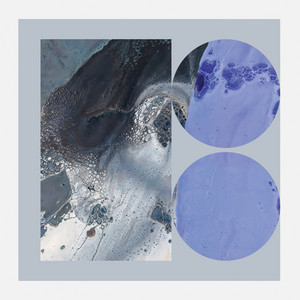
Ambient records that are about something usually announce it in the press release and then dissolve. Melting Days, out August 21st on Ghostly International, is Jeff McIlwain’s rebuttal: an album whose subject is legible in the sound design itself, from the first track to the last.
The Sonic Breakdown
The Production & Mix
The Low-End: Trent Moorman, a longtime McIlwain collaborator, supplies percussion — much of it sampled — and it is doing structural work. Writing for Bandcamp Daily, Dusty Henry noted that Moorman’s rhythmic flourishes “add energy and physicality,” giving “the heft the music needs to lift from the consuming weight of grief into brighter days.” That is the whole low-end strategy: percussion as buoyancy, not as groove.
The Spatial Dynamics: The record’s arc is a deliberate loss of focus and a slow recovery of it. Henry describes an opening of “sputtering clicks, and loops of horns and synthesizers” before “things start to get murkier. Tracks start to crackle more” — a middle stretch where, in his phrase, “its descent into ‘lost-ness’ is palpable.” Bryan Manzo’s saxophone threads through without ever stepping forward as a lead, which is why the haze reads as atmosphere rather than as ornament.
Standout Performance
McIlwain as an arranger of endings. “These Walls,” the penultimate track, is the release valve — Henry heard it as “exuding a feeling of gratitude—like a long exhale after a harrowing journey.” Then “Uncharted” declines to resolve, closing on saxophone and synth with the question left open.
Why It’s Certified
Bandcamp Daily named it Album of the Day on August 25th. McIlwain described the state the album came out of as “watching your previous life get foggier and foggier,” and the remarkable thing is that he found a way to make fog have a shape. Start with “Apparition” and “These Walls,” and give the middle of the record the patience it asks for. Certified great.