Marina Herlop's 'Dja Dja' Is a Gloriously Overbuilt Cathedral of a Pop Record
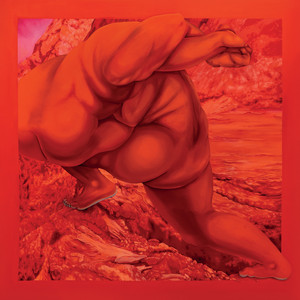
Marina Herlop spent three years on Dja Dja, and you can hear every one of them — not as labour, but as structure. For months a vast cardboard diagram lay on her studio floor, mapping harmony, instrumentation, tempo and meter until, in her own words, “its private rules acquired the force of law.” The scaffolding was Joseph Campbell’s hero’s journey. Then she took it away. “The frame is gone; the music stands without it.”
The Sonic Breakdown
The Production & Mix
The Low-End: Herlop withholds it on purpose. Voice and bass, so central to Pripyat and Nekkuja, are “held deliberately in reserve” by her own account — and when they land, they land like a door swinging open. The Spatial Dynamics: she produced and recorded the whole thing herself, then handed the mix to Joker and James Ginzburg (with Alex Ferrer mastering), and the depth shows: a gamelan recorded in Bali with local musicians sits in the same air as orchestral brass she scored, for the first time, entirely by intuition. Fifteen tracks answer to each other — “a giant sudoku built out of smaller sudokus.”
Standout Performance
Adri González, credited as production advisor, is the record’s unsung MVP. Herlop calls him the “score doctor” who sat with her “through the long work of harmony, structure and mix,” and he turns up as a performer too, on “Vas volant.” Three years is a long time to keep someone honest.
Why It’s Certified
Her first self-released album — distributed by Lapsus and !K7, but nobody’s calendar but her own — and the freedom is audible. Pitchfork’s Matthew Blackwell, making it a Best New Album, called it “her most ambitious album yet, at once weirder, wilder, and more thoughtful than her previous work.” DJ Mag’s Ben Cardew found “beauty, fun and groove to be found throughout.” Both are right, and neither quite prepares you for “Thálassa!”