Thorn Wych's 'Aesthesis' Is Folk Music Played on Instruments She Grew Herself
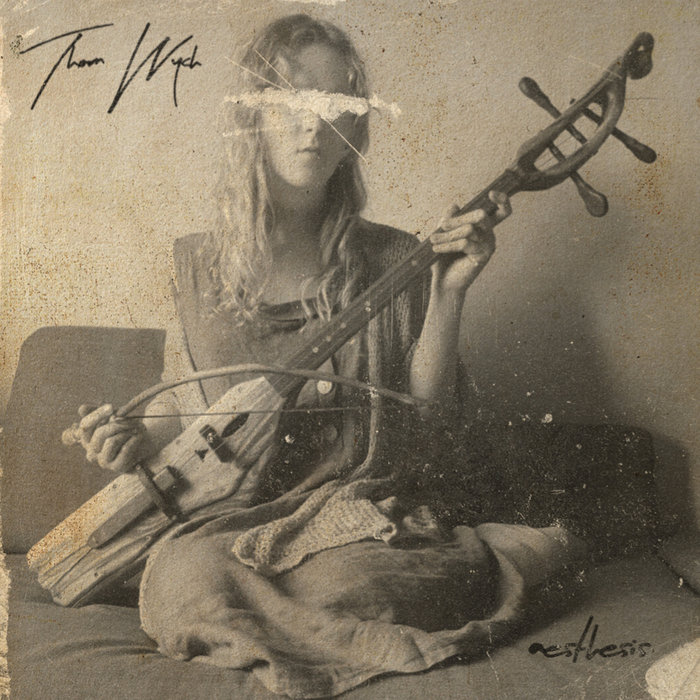
Most records are made with instruments somebody bought. Aesthesis was made with instruments Thorn Wych cut from trees in her own backyard in Bacup, Lancashire — wych elm, lime, wild cherry, oak, yew, beech — and then built into bowed strings, fipple flutes and percussion in a workshop out back. She lets the branches sit before deciding what they’ll become. “The tree will tell me what instrument it should be,” she told Foxy Digitalis. The three-string, cello-like Bowstrum she made from wych elm is her primary voice here, and it’s the object on the album cover.
The Sonic Breakdown
The Production & Mix
The Low-End: The Bowstrum carries the floor of this record, and because it’s a handmade box with handmade strings, its bottom register is uneven in the best way — bowed notes swell, catch, and decay differently every time. Nothing has been flattened into consistency. The Spatial Dynamics: Wych recorded and mixed the whole thing herself at home, improvising alone in her living room through three looper pedals, a circuit-bent Time Machine and Glowfly pedals, then overdubbing drums and flutes afterward. “Every track started as a recording of me improvising by myself in my living room,” she said — and the mix keeps that domestic scale, so the loops feel like they’re accumulating in an actual room rather than in a plugin.
Standout Performance
Wych as instrument builder, which is inseparable from Wych as player. Bandcamp Daily’s J. Edward Keyes, naming it an Essential Release, wrote that “played on instruments she creates herself from tree branches taken from her backyard, the songs groan and creak and howl.” A Spike Fiddle made of lime and a Hurdy Gurd made of yew turn up too, and every one of them sounds like a specific piece of wood rather than a category.
Why It’s Certified
The material behind it is as strange and specific as the sound: the record draws on the Secret Book of John, the 1940 film The Thief of Bagdad, and Lata Mangeshkar’s Meera Bhajans, and it’s dedicated to the Divine Mother Asherah. KLOF Mag called it “a uniquely individual sound,” and The Hobbledehoy described “an earthy and ancient-sounding form of off-grid music.” From “Ouch Epi Ptoe” to “Anaro Knows,” this is what total self-sufficiency sounds like — and Tompkins Square putting it on vinyl means a lot more people get to hear it. Certified great.