The Pedalboard Is an Autobiography
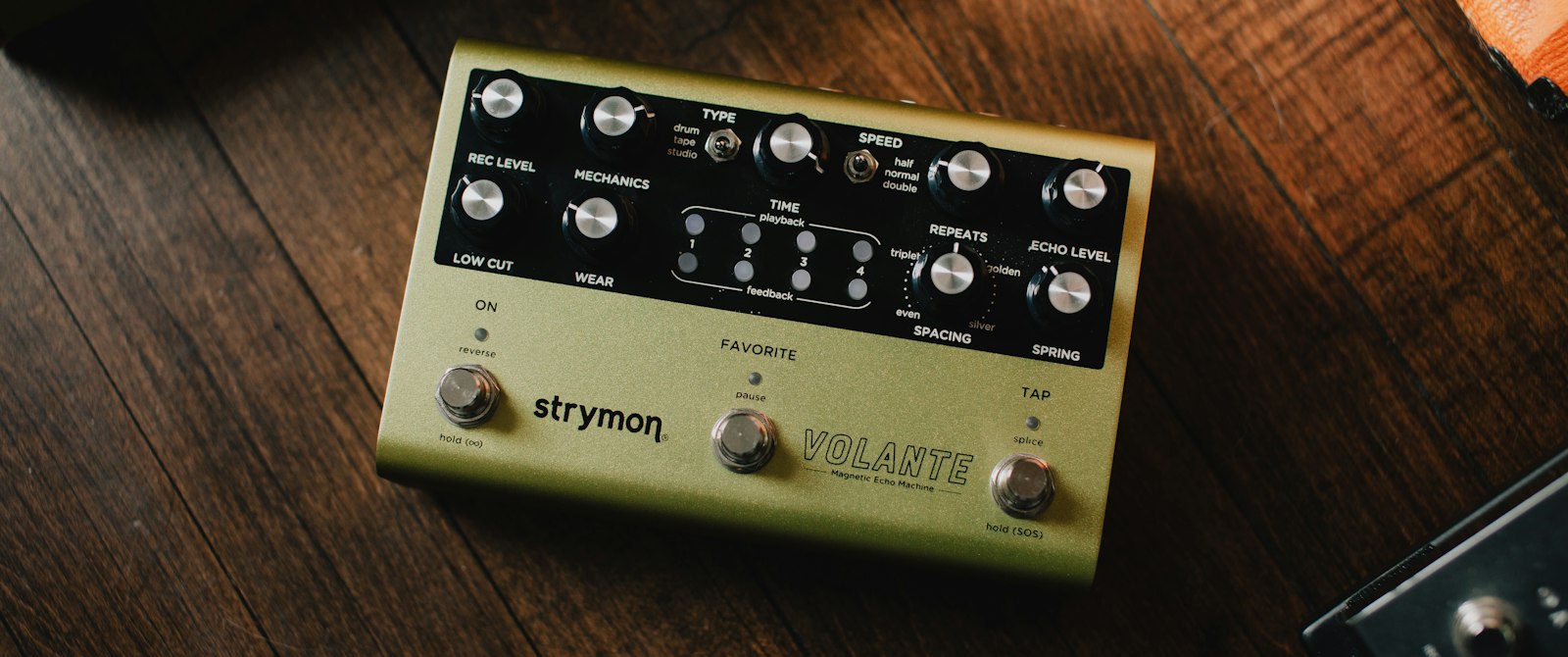
Look down at any working guitarist’s feet and you are looking at a diary that happens to be made of aluminium and velcro. Nobody designs a pedalboard from scratch. It accumulates, the way a kitchen accumulates pans, and like a kitchen it tells you far more about the cook than any stated philosophy would.
Every Box Has a Date On It
There is always an origin pedal — the first one, usually a distortion, usually bought with money that should have gone somewhere else. It stays on the board long past the point of usefulness because removing it would be a small act of self-betrayal.
Then there are the acquisitions with timestamps. The delay bought in a hurry the week before a support slot, because the songs suddenly needed air. The fuzz from a friend who quit. The compressor acquired during the year everything had to sound expensive. The tuner, which nobody is sentimental about and nobody plays a show without.
Read in order, a board is a career. You can see the phase where the player wanted to sound enormous, and the later phase where they learned that enormous is easy and clarity is hard.
The Order Is the Argument
Signal chain is where taste stops being decorative. Put the fuzz before the wah and you get one instrument; reverse them and you get another. Run modulation into delay and the repeats wobble; run delay into modulation and the whole field moves at once. These are not settings. They are opinions about what should happen first.
The most revealing pedal is the one that never gets switched off — the always-on compressor, the mild overdrive left engaged all night. That is not an effect. That is the player’s actual sound, and they built it one purchase at a time without ever writing it down.
The Ugly Board Is Usually the Good One
There is a particular kind of board that shows up at small venues: mismatched enclosures, one pedal held on with gaffer tape, a patch cable that everyone involved knows is on borrowed time. It almost always sounds better than the immaculate one, because every box on it survived a selection process conducted at volume, in rooms, in front of people.
Tidy boards are often aspirational. Ugly boards are evidential. The scuffs are where the decisions happened.
Nobody Gets to the End
The board is never finished, which is the point. There is always a space left, taped off, waiting. Somewhere in the next year a song will need something that none of these boxes can do, and the diary will get another entry.
Look down. It is all there.