Spread Joy's 'III' Is 17 Minutes of Art-Punk Calisthenics Executed With Mathematical Precision
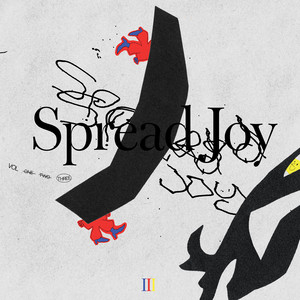
Seventeen minutes. Ten songs. The band’s own description, quoted by Post-Trash, is “a full-bodymind workout,” and the first album in four years from this Chicago quartet takes that literally.
The Sonic Breakdown
The Production & Mix
The Low-End: Nick Beaudoin, previously of Negative Scanner, is the engine. Post-Trash’s Mimi Norton singled out his “impeccably propulsive bass lines, best evidenced on ‘Cautionary Tale,’” and noted that Tyler Bixby’s “drumming is so controlled that the band’s shifting time signatures sound effortless.” That’s the whole trick: a rhythm section that makes odd meters feel like walking.
The Spatial Dynamics: Nothing is buried, because there’s no time to bury anything. Raidy Hodges’ “buoyant riffs shine, especially on the great ‘Olli Oxen Frei,’” per Norton, and when the band do let things fray — “like at the end of ‘Left the House’” — it’s “only to demonstrate how quickly they can snap back into perfect synchronicity.”
Standout Performance
Briana Hernandez, who treats phonetics as an instrument. Post-Trash: she “milks the phonetics of every word so that her delivery alone is a performance… She sings and yelps equally, playing with volume and pitch to distort sounds in new ways.” On “Abolish Chance” she invokes Mallarmé in a baby voice; on “(Why Can’t) I” she switches “between sardonic falsetto and staccato squeals.”
Why It’s Certified
Because it’s the rare avant-garde post-punk record that is also fun on the first pass. Norton’s verdict: “Their first album in four years sees the band lean harder into tempo changes, odd time signatures, and surprising new rhythms… It’s not pop music, per se, but this album is hookier than their previous work. What’s most impressive is how these elements lock together with mathematical precision.”
Play “Pygmalion” twice. It’s shorter than reading about it.