Open Tunings Are a Whole New Instrument
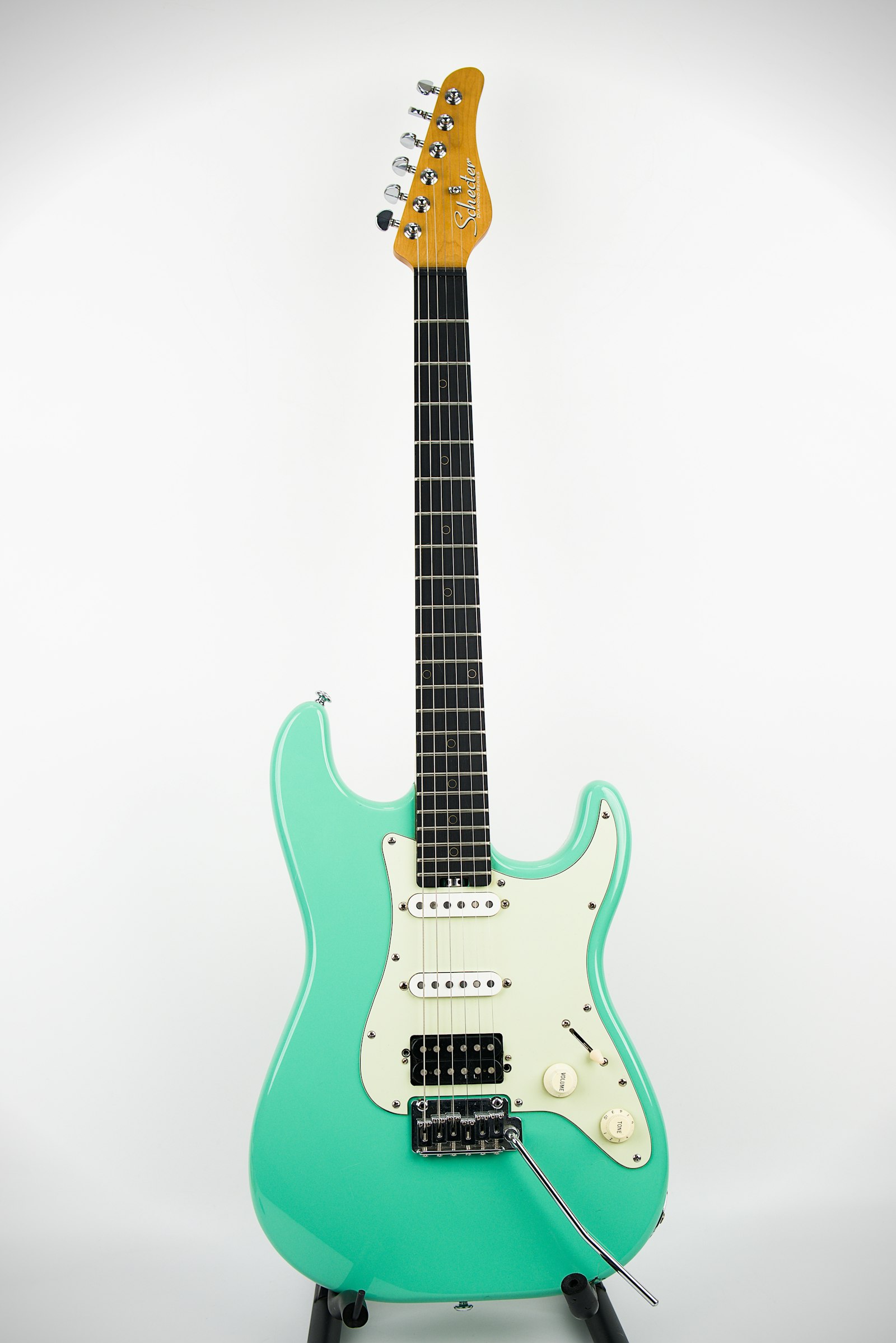
There’s a moment every guitarist eventually has. You’ve learned your shapes, you can get around the neck, you know roughly what your instrument sounds like. Then somebody tells you to drop the low E down to D, and suddenly a chord you’ve played ten thousand times rings out as something you’ve never heard. Three fingers you weren’t using are now free. A drone you didn’t ask for is holding the whole thing together.
That isn’t a tweak. That’s a new instrument, and it arrived for free.
The fretboard forgets what you know
Standard tuning is a compromise — a clever one, optimised so that most shapes are reachable by most hands. But a compromise is still a set of constraints, and your muscle memory has spent years learning to love them. Change the tuning and that memory becomes useless in the most productive way possible. You can’t fall back on the shapes you know, because they don’t mean what they used to. You have to listen again.
This is why open tunings have always been a songwriter’s tool more than a technician’s one. Joni Mitchell built an enormous body of work across dozens of tunings, many of them her own, and the harmonic strangeness of those records isn’t decoration — it’s what the tunings handed her. Keith Richards pulled the sixth string off entirely and played open G on five, which is why those riffs sit in a place no standard-tuned guitar quite reaches. Sonic Youth treated altered tunings as compositional raw material, a different guitar for nearly every song. DADGAD became the native language of a whole strand of Celtic and British folk guitar. Drop D became the floor that heavy music stands on.
None of those are tricks. They’re decisions about what the instrument is allowed to do.
Easy is not the same as lazy
There’s a mild snobbery around open tunings — the suggestion that they’re a shortcut, that a one-finger barre is cheating. It’s nonsense, and it misunderstands what’s happening. Yes, some chords get easier. That’s the point. What you do with the hand you’ve just freed up is the whole art. The drone strings ringing underneath aren’t a crutch; they’re a bed you now have to write something worthy of.
And the mistakes change too, which is the secret pleasure. In standard tuning your wrong notes are familiar wrong notes. In an open tuning you don’t yet know where the ugly places are, so you find them by accident — and every so often the accident is better than the plan.
Go retune something
You don’t need new gear. You don’t need a teacher. You need about forty seconds and a willingness to sound bad for a while. Take the guitar that’s in the corner, drop the sixth string a whole step, and play the dumbest thing you know. Then try open D. Then try tuning it to something nobody named, and write down what you did so you can find your way back.
Somewhere in there is a song that cannot exist in standard tuning. It’s been waiting for you to loosen a peg.