The Click Track Is Not the Enemy (Time Feel Is Something You Build)
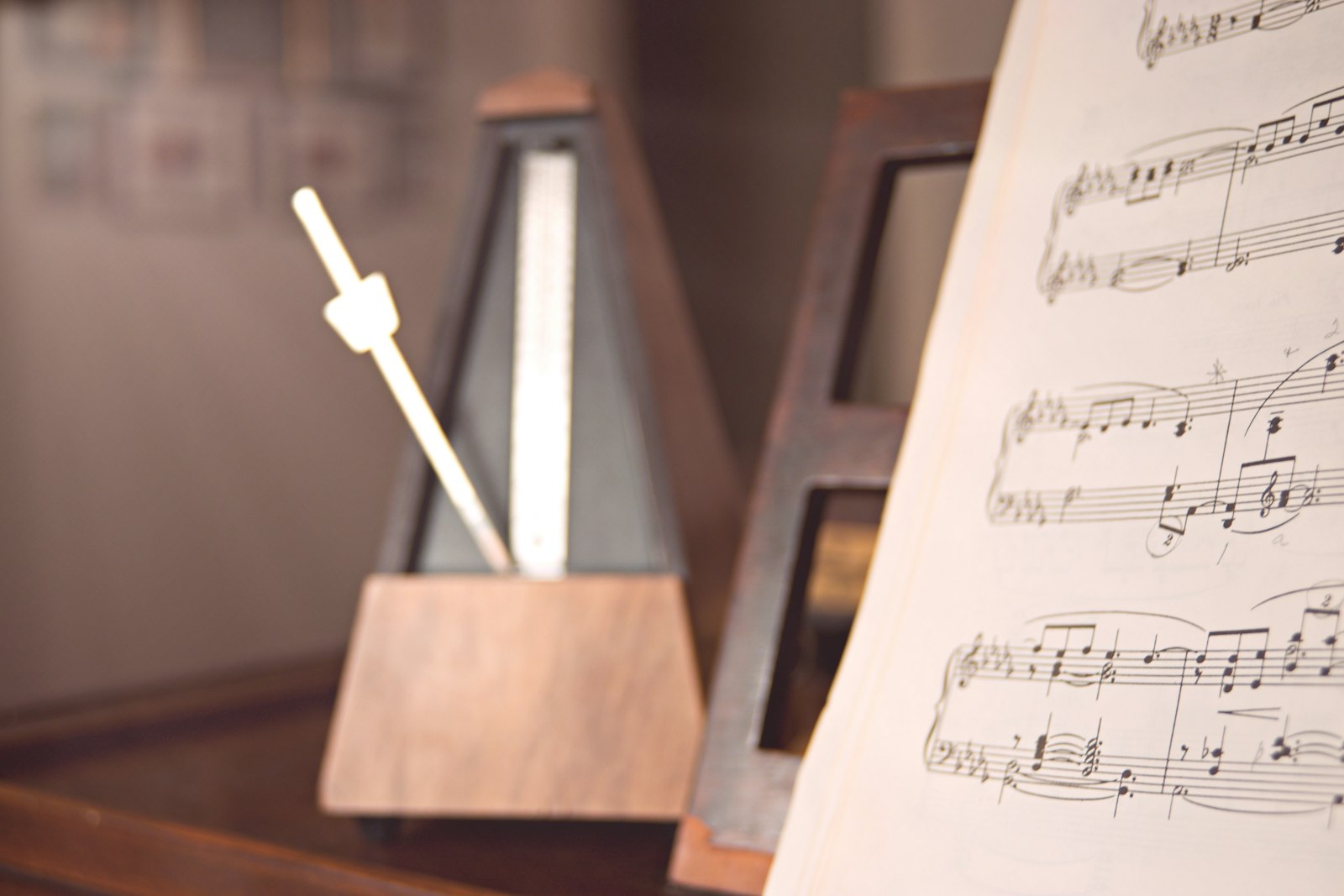
There is a story everybody in a rehearsal room has heard. Records used to breathe, the story goes, and then the click track arrived and flattened them into a grid, and that is why nothing swings anymore. It is a tidy story. It is also mostly wrong, and believing it has probably cost more young players more good takes than any other piece of received wisdom in music.
A Click Is a Reference, Not a Ruler
Here is what a metronome actually gives you: a fixed point that everyone in the room agrees on. That’s it. It does not tell you to play on it. The entire art of time feel is in your relationship to that fixed point — how far behind it you sit, how far ahead you lean, and whether you do the same thing in the verse as in the chorus.
Listen to what the great rhythm sections actually do. The snare lands a hair late and the bass a hair early, and the gap between them is the groove. That gap is only available to you if you know where the center is. Take the reference away and you aren’t playing loose, you’re playing lost — and those sound nothing alike. A band drifting four BPM slower every chorus isn’t breathing, it’s just tired.
The Grid Is Where Deliberate Lateness Lives
The producers with the deepest pockets of feel are almost always the ones most comfortable with a timeline. They’ll nudge a hi-hat eight milliseconds back because the chorus needs to lope, then put it dead center when the bridge needs to stand up straight. That’s not the grid defeating the human. That’s a human using the grid as graph paper.
And when a take genuinely needs to float free of all of it, those are the people who know it, because they can hear the difference between a performance that is pushing against time on purpose and one that simply lost the thread.
Practice With It, Then Play With It
So turn it on. Learn where the middle is. Spend a few weeks finding out what your natural tendency is — almost everybody rushes, most of us by more than we’d guess — and then stop fighting the tendency and start choosing it.
The click isn’t there to make you a machine. It’s there so that when you decide to drag the second half of the chorus, you can do it the same magnificent way twice.